 Skip to main content
Sony IMX455 sensor: Complete technical guide
When field coverage is the main constraint, sensor format should be your primary specification. And the Sony IMX455 is built around that premise: a 35mm full-frame CMOS sensor delivering 61.17 megapixels at 3.76μm pixel pitch, with native 16-bit readout and a back-illuminated architecture.
In astronomy, it covers the same sky area as traditional 35mm film at a given focal length; in industrial inspection, a single frame replaces multiple imaging positions; and in life sciences, entire well plates can fit within one acquisition.
In this guide, we’ll cover the IMX455’s specifications, its real-world performance, and how Atik’s Apx60 camera puts it to work in professional scientific imaging.
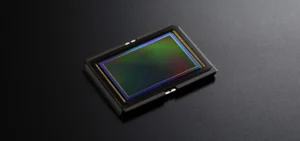
Sensor architecture
Full-frame format is the defining characteristic here. With a 43.3mm diagonal and 36mm × 24mm active area, the IMX455 has roughly 2.3× the imaging area of the IMX571, using the same 3.76μm pixel pitch. That shared pixel architecture means per-pixel noise characteristics are closely related between the two sensors; what differs is how much of the scene each one captures.
Sony’s back-illuminated structure underpins the IMX455’s sensitivity.¹ ² By inverting the silicon substrate so light enters from the rear, the photodiode layer is exposed directly without interference from metal wiring layers that sit in front of the pixels in conventional front-illuminated designs. This increases the effective light-collecting area of each pixel and reduces the optical path loss that limits sensitivity in older sensor architectures.
Resolution and format
| Parameter | Value |
| Effective pixels | 9576 × 6388 (61.17 MP) |
| Total pixels | 9602 × 6498 (62.39 MP) |
| Active imaging area | 36mm × 24mm |
| Sensor diagonal | 43.3mm (Type 2.7) |
| Pixel size | 3.76μm × 3.76μm |
Readout and interface
- Native 16-bit analog-to-digital conversion³
- Maximum frame rate: 3.97 fps at full resolution (16-bit mode)³
- Supported output depths: 10-bit, 12-bit, 14-bit, 16-bit³
- Built-in programmable gain amplifier (PGA), up to 36dB³
- 8-lane SLVS-EC output interface
- Rolling shutter operation⁴
- RGB Bayer color filter array (color variant); no CFA on monochrome variant
Performance
Quantum efficiency: Strong across the visible spectrum
Back-illuminated sensors of this generation reach peak QE above 80% in the green channel, with consistent response across the 400–700nm visible range.¹ Red-channel sensitivity stays above 60% through 650nm, putting H-alpha at 656nm within useful range for emission-line imaging without any sensor modification. Across the visible spectrum, BSI architecture typically improves QE by 20-30% over front-illuminated equivalents at equivalent pixel pitch.
For narrowband work, the monochrome variant is the more efficient choice. Without a Bayer color filter array, every pixel integrates the full incoming spectrum filtered only by whatever narrowband filter is in front of the lens. In a Bayer-filtered sensor, each narrowband wavelength falls on only a fraction of pixels – green on roughly 50%, red and blue on 25% each – wasting most of the available photon collection area.
Dynamic range and bit depth: Native 16-bit, no interpolation
Native 16-bit ADC produces 65,536 discrete output levels.³ This is worth clarifying: many sensors with 16-bit output are actually digitizing at 12 or 14 bits and padding the result, which preserves nothing at the low end of the signal range. Genuine native 16-bit conversion means the least significant bits carry real signal information, which matters for any application measuring small photometric variations or doing radiometric calibration where the full dynamic range needs to be trusted.
Gain modes, linearity, and calibration
Read noise reaches 1.2 e- in high gain mode, dropping the noise floor low enough that photon shot noise dominates well before electronic noise becomes limiting – important for faint-signal applications where long exposures accumulate signal slowly. Low gain mode trades that noise floor for a higher full-well ceiling, keeping bright features from saturating in high-dynamic-range scenes.
One practical implication: calibration frames (darks, flats, bias frames) built at one gain setting cannot be applied to data captured at the other. This isn’t a limitation unique to the IMX455, but it’s a workflow detail that trips up automated pipelines if gain mode selection isn’t locked consistently at the start of each session.
Full-well capacity
Standard readout yields approximately 51,000 electrons of full-well capacity per pixel. Extended readout modes in some camera implementations push this above 80,000 electrons. For astrophotography, the consequence is practical: bright star cores and dim nebular filaments can coexist in the same frame without either saturating or disappearing into noise: a scenario that would require HDR bracketing on sensors with lower full-well depth.
Dark current and thermal behavior: Negligible at operating temperature
Cooling is the main lever for controlling dark current. At -15°C, the Apx60 implementation measures dark current at 0.002 e-/pixel/second. At that rate, a one-hour exposure accumulates roughly 7.2 electrons of dark signal per pixel: manageable with standard dark subtraction and negligible against the shot noise of most deep-sky targets. Multi-hour exposures remain practical without dark current becoming the limiting noise source, which matters for:
- Wide-field deep-sky integrations requiring multi-hour total exposure
- Time-lapse sequences where frame-to-frame sensor consistency is required
- Scientific measurements that need repeatable thermal conditions across sessions
- Extended industrial inspection runs with long integration times
Atik Apx60: Scientific CMOS camera implementation
Atik’s Apx60 is the full-frame camera built around the IMX455 in both monochrome and color variants. The engineering is focused on thermal stability, readout integrity, and integration into professional workflows – applied to the demands of a 61-megapixel full-frame sensor.

Thermal management: Stable setpoint, not just cooling
Thermoelectric cooling pulls sensor temperature 35°C below ambient, with active closed-loop regulation holding it at a stable setpoint rather than simply reaching a target and drifting. In practice, this means dark frames captured in one session remain applicable in future sessions at the same setpoint, avoiding repeated calibration overhead. At -15°C to -20°C operating range, dark current stays below 0.002 e-/pixel/second.
Sealed construction and anti-condensation optics keep the sensor and optical window protected in environments where temperature differences between camera and surroundings would otherwise cause moisture problems. Anti-reflection coatings on the window reduce ghost reflections in high-contrast imaging.
Readout architecture
Full 61-megapixel output at 16-bit depth runs at 3.1 fps. This is slower than APS-C sensors of the same pixel pitch — a direct consequence of the larger pixel count — but for the applications the sensor is built for, frame rate is rarely the constraint. A 512MB onboard buffer handles situations where the host system can’t accept data fast enough, preventing dropped frames during sustained acquisition.
Available readout modes:
- Full resolution — 9576 × 6388 px at 16-bit, for maximum spatial and tonal detail
- Windowed readout — higher frame rates at reduced resolution, for focusing, guiding, or dynamic event capture
- Variable gain — high and low gain settings across applications, from faint narrowband targets to bright-field industrial scenes
Connectivity and mechanical integration
Data transfer runs over USB 3.0 (5 Gbps), with an onboard hub for filter wheels, guide cameras, or other accessories. Optical coupling uses M54 × 0.75mm threading, with a 17.5mm sensor-to-flange distance – reducible to 10.5mm by removing the levelling plate for tighter optical trains. Sensor tilt adjustment is available for precision focal plane alignment, which carries more consequence at full-frame format than at smaller sensor sizes: field curvature and tilt errors that are negligible at the corners of an APS-C sensor become visible across a 43mm diagonal.
The Apx60 is Atik’s full-frame IMX455-based scientific CMOS camera, available in monochrome and color.
View the Apx60 | Download the datasheet | Contact Atik
Application areas
Astronomy research
Field of view is where the IMX455 differentiates itself in astronomical use. At any given focal length, the 43.3mm diagonal captures a sky area that would require a mosaic with smaller sensors – for large emission nebulae, galaxy groups, or Milky Way segments, this can eliminate stitching entirely or reduce it from many panels to one or two. Paired with a full-frame corrected refractor or astrograph, it matches the field coverage that astrophotographers previously associated with large-format CCD cameras.
Sampling-wise, the 3.76μm pitch suits medium to long focal length systems (f/5 to f/8) for well-matched sampling of typical seeing. Faster widefield systems benefit from 2×2 binning, which brings effective pixel size to 7.52μm and reduces the frame to 15 megapixels – a useful operating mode for survey work or when field coverage matters more than resolution.
For narrowband work, low read noise in high gain mode keeps single sub-exposures useful even with tight filters, where signal rates are low. H-alpha and OIII both fall within the sensor’s useful spectral range. Precision photometry – transit detection, variable star monitoring, occultation timing – benefits from the sensor’s linearity and native 16-bit depth, where subtle flux changes across many frames need to be tracked reliably.
Space domain awareness and defense
Sky survey coverage per frame is directly proportional to sensor area, which makes the full-frame IMX455 useful for space domain awareness applications where search area and dwell time per field are in tension. High sensitivity supports detection of faint objects against sky background, and the combination of extended integration and low dark current at operating temperature maintains usable SNR for slow-moving or distant targets.
IMX455 vs related Sony sensors
| Specification | IMX455 | IMX571 | IMX533 | IMX174 |
| Resolution | 61.17 MP | 26.11 MP | 9 MP | 2.3 MP |
| Effective pixels | 9576 × 6388 | 6252 × 4176 | 3008 × 3008 | 1920 × 1200 |
| Pixel size | 3.76 μm | 3.76 μm | 3.76 μm | 5.86 μm |
| Sensor format | Full frame (Type 2.7) | APS-C (Type 1.8) | Micro Four Thirds | 1/1.2″ |
| Diagonal | 43.3 mm | 28.3 mm | 16.0 mm | 15.9 mm |
| Max frame rate (16-bit) | 3.97 fps | 6.84 fps | 120 fps | 164 fps |
| Key advantage | Maximum field coverage and resolution | Balanced resolution and sensitivity | Fast readout, compact format | Exceptional frame rate |
| Trade-off | Slowest readout, largest data volume | Moderate frame rate | Lower resolution | Lowest resolution |
- The IMX571 is the closest relative: same pixel pitch, same BSI architecture, meaningfully different format. Choosing between them is more like a question of whether the APS-C field is sufficient. If it is, the IMX571 offers faster readout, smaller files, and a lighter optical system requirement. If full-frame coverage is needed — or desirable, while the IMX455 provides it at the cost of slower throughput and higher data volume per frame.
- The IMX533 occupies a different position: same pixel pitch again, but in a compact square Micro Four Thirds format optimized for speed rather than coverage. For applications where frame rate matters more than field size, it’s the better fit.
- The IMX174 is built for high-frame-rate work, with larger 5.86μm pixels that improve per-pixel sensitivity and a small format that enables the 164 fps it’s known for.
Implementing the Sony IMX455 Sensor
Before committing to a system design, a full-frame sensor at this resolution introduces some practical constraints worth working through:
Data volume – Each frame at full resolution and 16-bit depth is approximately 116MB. At 3.1 fps, that’s around 360 MB/s of sustained output. USB 3.0 can carry it in theory, but storage systems, processing pipelines, and network infrastructure need to be validated for that write rate before deployment, not after.
Optical coverage – The 43.3mm diagonal is unforgiving of undersized optics. Lenses or telescope correctors specified for APS-C will vignette significantly at the corners of this sensor. Full-frame coverage needs to be explicitly confirmed for every optical element in the train — field flatteners, reducers, and filter glasses included.
Monochrome vs. color – For narrowband, spectral, or filter-wheel-based multispectral imaging, monochrome is the clear choice: 100% pixel utilization at every wavelength versus 25–50% with a Bayer filter. For direct RGB acquisition without a filter wheel, the color variant is simpler and faster. The right answer depends on whether the application requires spectral selectivity.
Gain mode consistency – Calibration frames must match the gain mode used for science frames. This is easy to enforce manually but needs to be built into automated pipeline logic to avoid silently applying the wrong calibration library.
Power and thermal environment – The cooling system requires 12VDC at 5A and needs ambient temperature within its rated delta. Sealed optics manage condensation under most conditions, but deployments in cold outdoor environments with warm camera bodies should account for worst-case condensation scenarios.
Frequently asked questions
What is the IMX455 read noise at different gain settings? High gain mode achieves read noise as low as 1.2 e-, making it the right choice for faint-signal applications. Low gain mode sits at approximately 3.6 e- with a higher full-well ceiling — better for scenes where avoiding saturation matters more than minimizing noise floor.
Is there an official IMX455 datasheet available? Sony Semiconductor Solutions publishes product flyers for the IMX455 variants (AQK, BQK, ALK) covering device structure, pixel specifications, and readout mode tables.³ These are the primary public reference for sensor-level specifications. Full electrical datasheets require a registered distribution relationship with Sony.
Does the IMX455 support global shutter? No, it supports rolling shutter only.⁴ For many applications, this has no practical consequence. Fast-moving subjects can show image skew under rolling shutter readout, so applications in that category should evaluate global shutter alternatives.
How does the IMX455 compare to the IMX571 for astrophotography? Per-pixel sensitivity is nearly identical: same pixel size and same BSI architecture. The difference is sky coverage: at any given focal length, the IMX455 captures roughly 2.3× the area of the IMX571. If wide-field coverage drives the application, the IMX455 is the better fit. If the APS-C field is sufficient, the IMX571 is faster (6.84 vs. 3.97 fps at 16-bit) and produces smaller files.
Can calibration frames be reused across sessions with the Apx60? Yes, as long as the sensor temperature setpoint is consistent. Active thermoelectric regulation holds temperature independently of ambient conditions, so darks remain valid session to session at the same setpoint. Flat fields should be retaken any time the optical train changes.
Is the Apx60 compatible with standard astronomy acquisition software? Yes, ASCOM on Windows, with support for Sequence Generator Pro, N.I.N.A., and Prism. FITS output is standard. An SDK is available for custom scientific or industrial pipeline integration.
What storage throughput is needed for sustained acquisition? At 3.1 fps and 16-bit full resolution, the sustained write rate is approximately 360 MB/s. The 512MB onboard buffer handles transient bottlenecks, but the storage backend – whether local NVMe, RAID, or network – needs to sustain that rate over the full acquisition window.
Conclusion
Resolution and field coverage are what the IMX455 is built for. At 61 megapixels across a 43.3mm diagonal, it captures more of the scene per frame than any other sensor in Sony’s scientific sCMOS lineup — at the cost of slower readout and higher data volume. For the applications where those trade-offs make sense — wide-field astronomy, large-area inspection, high-content biological screening — the sensor is well-suited and the specifications hold up under real working conditions.
Atik’s Apx60 wraps that sensor in a camera system designed for sustained professional use: active thermal management, sealed optics, a mechanical interface built for precision alignment, and software compatibility across the major astronomy and scientific platforms. It’s a practical choice for any workflow where the full-frame format is the deciding factor.
Explore the Atik Apx60
The Apx60 is available in monochrome and color configurations. Full specifications, pricing, and ordering information are on the product page. For application-specific questions or integration support, the Atik team can help you evaluate whether it’s the right fit.
View the Apx60 product page | Download the datasheet | Talk to Atik Cameras
Sources
