 Skip to main content
Atik 4-Series – The Atik Legacy
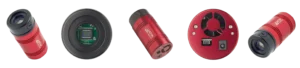
The Atik 4-Series represents a significant milestone in Atik Cameras history, serving as a core pillar of our products for over a decade during the peak of the CCD era. The 4-Series was engineered to set a new precedent for high-quality cooled CCD cameras and in this article you can check the main benefits of each camera, download the usar manuals and have a better understanding of Atik’s history.
The 4-Series goal
The 4-Series began as a board-level OEM camera developed for a spectroscopy instrument, built around Sony’s ICX285 CCD sensor. As its performance and compact design proved highly versatile, the platform was later adapted into a complete camera for astrophotography, becoming the foundation of one of Atik’s most successful product families.
Our goal with the 4-Series was simple: deliver the highest possible imaging performance in the smallest possible form factor. With a compact body, enhanced regulated cooling and high-sensitivity Sony CCD sensors, the series was designed to provide a versatile solution for both wide-field refractors and specialized imaging systems.
Designed and assembled in our ISO 9001 and ISO 14001 certified facilities, the 4-Series quickly became a trusted choice for long-exposure astrophotography as well as scientific applications such as spectroscopy and photometry.
Models: the 4-Series lineup
The Atik 4-Series consisted of 8 distinct models, each tailored to specific imaging needs and telescope focal lengths:
Atik 420
The Atik 420 was designed as a highly cost-effective cooled imaging solution, specifically tailored for use with short focal length telescopes. It features the Sony ICX274 sensor with 2 million square pixels, providing high-resolution imagery and a “widescreen” field of view that was refreshing for its class. Its low weight and slim profile ensured no flexure on telescope focuser tubes.
This model is particularly effective when paired with fast apochromatic refractors to deliver wide-angle views at an accessible price. Like all cameras in the series, it features a high-quality BBAR-coated optical window to eliminate reflections and an external desiccant port, allowing users to maintain the sensor chamber without opening the camera body.
Download the Atik 420 User Manual
Atik 450
Mirroring the philosophy of the 420, the Atik 450 served as an accessible entry point into cooled CCD imaging for short focal length setups. Utilizing the Sony ICX655 sensor, it delivered reliable 16-bit data with the signature regulated cooling of the 4-Series, capable of reaching 30°C below ambient for consistent calibration.
The camera provides a resolution of 2448×2050, making it a high-resolution specialist within the compact range. Its narrow body design and low heat dissipation make it an ideal candidate for Hyperstar and Fastar systems, where minimizing obstruction in front of the telescope is critical.
Download the Atik 450 User Manual
Atik 414EX
The Atik 414EX followed the legacy of the renowned ICX285 sensor (from the 314L+) but introduced the high-sensitivity Sony ICX825 sensor. This model was widely celebrated for its exceptional Quantum Efficiency (QE) and incredibly low read noise, making it a favorite for researchers capturing faint structures, such as super-bright quasars billions of light-years away.
By utilizing Sony EXview HAD CCD II™ technology and 6.45µm pixels, the 414EX stands as one of the most sensitive cameras in its price range. Its noise floor is so low that many users find they can capture high-quality data without the need for traditional dark frames, simplifying the imaging workflow significantly.
Download tje Atik 414EX Product Brochure
Atik 428EX
The Atik 428EX was the first camera available to astronomers to utilize the state-of-the-art Sony ICX674 sensor. It established itself as a perfect match for narrowband imaging, offering exceptional QE in H-alpha, OIII, and SII. Its efficiency allowed for lower integration times while maintaining clean, artifact-free data.
As one of the lightest cameras in its class, it was engineered for stability and low power consumption, making it perfect for long sessions in the field. The 4.54µm pixel size provides high-resolution results across a wide range of common amateur telescopes, surpassing its highly-regarded predecessors in both sensitivity and thermal management.
Download the Atik 428EX User Manual
Atik 460EX
Widely regarded as a high-performance standard, the Atik 460EX featured the Sony ICX694 sensor. With its 6-megapixel resolution and outstanding sensitivity, it made “faint fuzzies” accessible even to amateur astronomers using smaller instruments. Its performance was so impactful that it served as the benchmark for our modern ACIS 7.1 CMOS camera.
The sensor diagonal is large enough to provide excellent sky coverage while remaining small enough to be used with standard 1.25” filters, even on fast f/2 systems. Beyond beautiful deep-sky vistas, the 460EX became a trusted tool in professional research, frequently utilized for spectroscopy to measure the red-shift of distant galaxies.
Download the Atik 460EX User Manual
Atik 490EX
The Atik 490EX was the highest resolution model in the core range, featuring 9.1 million pixels via the Sony ICX814 sensor. It was designed for maximum flexibility, allowing for effective binning while maintaining high pixel counts. Its ability to adapt to telescopes ranging from small refractors to large SCTs made it a true “one camera does all” solution.
With a resolution of 3380×2704, it offers incredible detail for astrophotographers looking to capture intricate structures within the deep sky. Its slim 60mm diameter profile ensures that it remains the premier choice for Hyperstar 8 and 11 systems, providing a massive field of view with minimal obstruction.
Download the Atik 490EX User Manual
Atik 4120EX
As the highest resolution One-Shot Color (OSC) model in the 4-Series, the Atik 4120EX utilized the Sony ICX834 sensor. Boasting 12 megapixels with small 3.1µm pixels, it delivered stunning detail and high Quantum Efficiency for photographers who prioritized the convenience of a color sensor without sacrificing Atik’s precision cooling.
The camera utilizes native 16-bit ADC to provide high dynamic range data, ensuring that subtle tonal transitions are preserved in every shot. This model was specifically engineered for those using shorter focal length telescopes who require maximum resolution and “widescreen” pixel counts for large-format printing.
| 420 | 450 | 414EX | 428EX | 460EX | 490EX | 4120EX | |
| Image sensor | Sony ICX274 | Sony ICX655 | Sony ICX825 | Sony ICX674 | Sony ICX694/5 | Sony ICX814/5 | Sony ICX834 |
| Resolution | 1620×1220 | 2448×2050 | 1392×1040 | 1932×1452 | 2750×2200 | 3380×2704 | 4242×2830 |
| Pixel size (um) | 4,4×4,4 | 3,45×3,45 | 6,45×6,45 | 4,54×4,54 | 4,54×4,54 | 3,69×3,69 | 3,1×3,1 |
| ADC | 16 bit | ||||||
| Readout noise (Typ.) | 4e | 5e | 5e | 5e | 5e | 5e | 5e |
| Cooling Delta | -30 | -30 | -30 | -25 | -25 | -25 | -25 |
| Regulated cooler | Yes | ||||||
| Water assist | No | ||||||
| Max. exposure | Unlimited | Unlimited | Unlimited | Unlimited | Unlimited | Unlimited | Unlimited |
| Min. exposure | 0,001s | 0,001s | 0,001s | 0,001s | 0,001s | 0,001s | 0,001s |
| Max. Frame Rate | N/A | ||||||
| Gain Factor | 0.13e-/ ADU | N/A | 0.28e-/ ADU | 0.27e-/ ADU | 0.27e-/ADU | 0.19e-/ ADU | 0.14e-/ ADU |
| Full Well Capacity | ~9,000e- | N/A | ~18,000e- | ~17,500e- | ~18,000 e- | ~12,500e- | ~9,000 e |
| Dark Current | ~0.0001 e-/s at -10°C |
N/A | ~0.001 e-/ s at -10°C |
~0.0002 e-/s at -10°C |
~0.0004 e-/ s at -10°C |
~0.0003 e-/ s at -10°C |
~0.0003 e-/s at -10°C |
| PC Interface | USB2 | ||||||
| Power requirements | 12VDC, 0.9A | 12VDC, 0.9A | 12VDC, 1A | 12VDC, 0.9A | 12VDC, 0.9A | 12VDC, 0.9A | 12VDC, 1A |
| Backfocus distance | 13mm | 13mm | 13mm | 13mm | 13mm | 13mm | 13mm |
| Thread on front | M42x0,75 | M42x0,75 | M42x0,75 | M42x0,75 | M42x0,75 | M42x0,75 | M42x0,75 |
| Weight | 400g | 400g | 400g | 400g | 400g | 400g | 400g |
| Mono or Colour | Either | Either | Either | Either | Either | Either | Colour |
The Series History

The technical authority of the 4-Series was built on the integration of Sony EXview HAD CCD II™ technology. This allowed for outstanding Quantum Efficiency (QE) and thermal management. One of the most significant advantages for users was the exceptionally low read noise, to the point where traditional dark frames were often not a requirement for successful calibration
Designed with long-exposure astrophotography as its primary focus, the 4-Series provided the precise data required to reveal faint details in sprawling nebulae and distant galaxies.
One of the defining characteristics of the 4-Series was its slim 60 mm cylindrical body. Originally developed from its OEM board-level roots, this low-profile enclosure allowed the cameras to be mounted on Fastar and Hyperstar systems without introducing significant central obstruction—even on smaller Schmidt-Cassegrain telescopes such as the Celestron C6. This unique form factor made the 4-Series an ideal solution for both dedicated Hyperstar imaging systems and conventional refractors and reflectors.
Beyond aesthetics, the low read noise and clean data made these cameras highly desirable for scientific applications, including:
- Spectroscopy: Measuring red-shift and chemical compositions.
- Photometry: Recording variable stars and exoplanet transits.
- Astrometry: Tracking rotating asteroids and supernova detection.
The end of the Series
While the Atik 4-Series has been officially discontinued, its impact on the astrophotography community remains profound. The conclusion of this series’ production was primarily driven by the industry-wide transition away from CCD sensors, as major manufacturers like Sony shifted their focus toward next-generation CMOS architecture.
However, the end of production does not mean the end of the journey for your equipment. Atik Cameras remains dedicated to the long-term support of the thousands of 4-Series units still in operation in observatories and backyards worldwide. These cameras continue to be fully compatible with our latest Universal Core Software installer, ensuring your investment remains a reliable tool for capturing the universe
Current Series Correlation
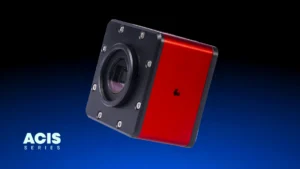
The natural evolution of the Atik 4-Series is represented today by the ACIS Series (Advanced CMOS Imaging Systems). Designed to bridge the gap between CCD sensitivity and CMOS performance, the ACIS 7.1 stands as the direct successor to the legendary Atik 460EX, utilizing the Sony IMX428 sensor to provide comparable low-light capabilities with the added benefits of faster readout speeds, reaching up to 28 frames per second, and exceptionally low read noise.
This modern range preserves the compact versatility that made the 4-Series a favorite for Hyperstar users and is fully compatible with our Infinity software for near-real-time viewing. For those requiring a high-resolution, 16-bit transition from models like the 4120EX, our APX Series offers the next level of professional imaging performance.
Frequently asked questions (FAQ)
Is the Atik 4-Series compatible with Windows 10 and 11?
Yes. All 4-Series cameras are fully supported by our current Universal Core Software installer for Windows. They also integrate seamlessly with modern third-party applications via our robust ASCOM drivers. Click here for software downloads page.
For more detailed guidance, please refer to the Artemis Capture Software User Manual.
I am having trouble connecting my camera after an update. What should I do?
This is typically a driver synchronization issue. To resolve it, locate the ‘Artemis CCD’ folder in your ‘all apps’ list, navigate to ‘Drivers’, and run the ‘OldDrivers’ executable while your camera is plugged in. This reset routine usually restores the connection immediately.
Do I really need to take dark frames with a 4-Series camera?
One of the hallmarks of the Sony EXview HAD CCD II™ sensors used in this series is exceptionally low read noise. While dark frames are always recommended for the highest precision, many 4-Series users find that the data is clean enough that traditional dark frames are not strictly required for successful imaging.
Can I use the 4-Series on a Hyperstar system?
Absolutely. The 4-Series was specifically designed with a slim 60mm diameter body to make it the premier choice for Hyperstar and Fastar systems, ensuring minimal obstruction in the light path.
Does Atik still provide repair services for these discontinued models?
Atik Cameras is committed to long-term support. If you have a technical hardware challenge, please contact our Technical Support Central to discuss repair or optimization options with our specialists.
Need more information? Contact the technical support
We are here to help you get the best performance from your Atik cameras. If you are experiencing technical challenges with your 4-Series setup or have specific questions about software compatibility, our specialized support team is ready to provide expert guidance. Contact our Technical Support

One Comment