 Skip to main content
Atik Large Format Series – The Atik Legacy
The Atik Large Format Series represents a significant milestone in our history, serving as a core pillar for capturing the “universe in grande scale” during the peak of the CCD era. Engineered to produce uncompromising image quality, these cameras allowed astronomers and researchers to transition from standard imaging to capturing deep-sky objects in unprecedented detail. For over a decade, this series set a new benchmark for high-resolution cooled CCD cameras, enabling stunning views suitable for printing at A3 size or larger.
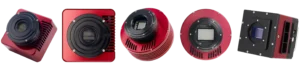
The Large Format goal
The primary goal of the Large Format Series was to provide a robust platform for the highly renowned ON Semiconductor (formerly Kodak) sensors. These sensors gained a formidable reputation in astrophotography for their balance of exceptional sensitivity and generous sensor size, which was required for large-format imaging of faint celestial structures.
To extract the optimal performance from Kodak scientific-grade chips, Atik utilized highly sophisticated control electronics and advanced thermoelectric cooling systems. These systems were designed to minimize thermal noise and hot pixels, reaching deltas of 38-45°C below ambient, with some models even supporting liquid or water assist for the most demanding environments. By combining this technical expertise with Kodak’s innovative sensor materials, which were significantly more transparent in the visible and near-infrared range, the series delivered the clean, precise data required for both breathtaking wide-field vistas and serious scientific research.
Models: the Atik Large Format legacy lineup
The Atik Large Format Series consisted of four distinct models, each designed to address specific needs in field coverage, resolution, and sensitivity. By utilizing scientific-grade Kodak CCD sensors, these cameras provided a level of data precision that established them as industry standards for over a decade
Atik 383L+
The Atik 383L+ was engineered to bring large-format imaging to an accessible price range without compromising on performance. At its core is the 8.3-megapixel Kodak KAF-8300 sensor, featuring 5.4µm square pixels that deliver high-resolution results across a variety of telescope focal lengths.
One of its most celebrated features was its ultra-low read noise (typical 7e-), which was on par with many Sony sensors of the era, enabling the detection of incredibly faint deep-sky details. With a mechanical shutter and exceptional linearity (R²=0.9998), the 383L+ was not only a favorite for stunning astrophotography but also a trusted tool for sensitive photometric measurements. Even with the CMOS revolution ongoing, the venerable 383L continued to have a loyal fan base, with the last sales of the model happening in 2025.
- Sensor: Kodak KAF-8300
- Resolution: 3362 x 2504 pixels
- Key Advantage: Balanced resolution and low noise at an entry-level large format price.
Download the Atik 383L+ User Manual
Atik 4000/4000LE
The Atik 4000 served as the ideal introduction to the joys of large-format imaging, optimized specifically for use with standard 1.25” filters. It featured the Kodak KAI-04022 sensor, boasting generous 7.4µm pixels that provided exceptional sensitivity for capturing dim celestial structures.
The standard model included a powerful dual-stage thermoelectric cooling system capable of reaching 40°C below ambient, with the option for water assist to reach -45°C in extreme conditions. The 4000LE (Light Edition) offered a more streamlined version with single-stage cooling. Both versions featured heated optical windows to prevent dewing during long observing sessions.
- Sensor: Kodak KAI-04022
- Pixel Size: 7.4µm x 7.4µm
- Key Advantage: High sensitivity and optimized filter compatibility for cleaner workflows.
Download the Atik 4000 User Manual
Atik 11000
The Atik 11000 represented the pinnacle of high-resolution cooled cameras in our product line. Featuring the legendary 35mm full-frame Kodak KAI-11002 sensor, this camera offered an enormous imaging area of 37mm x 26mm, the largest in Atik’s legacy range.
Its 11 million generously sized (9µm) pixels were designed to keep star images tight while maintaining the sensitivity required to capture deep-sky objects in unprecedented detail. With advanced two-stage cooling and liquid assist capabilities, the 11000 produced high-resolution frames suitable for professional-grade printing at A3 size or larger.
- Sensor: Kodak KAI-11002 (35mm Full Frame)
- Resolution: 4008 x 2672 pixels
- Key Advantage: Maximum field coverage and high-resolution print quality
Download the Atik 11000 User Manual
Atik 16200
As the highest-resolution camera in our legacy lineup, the Atik 16200 was designed for the most demanding astrophotographers. It utilized the APS-H size Kodak KAF-16200 sensor, providing a massive 16.2-megapixel array that captured intricate details on even the smallest and faintest targets.
The 16200 featured several “heavy-duty” enhancements, including a blade shutter for reliable, consistent performance and a sealed, argon-purged chamber to ensure a dry, condensation-free environment. Its cooling performance was industrial-grade, offering a maximum delta of 50°C below ambient, ensuring ultra-clean long exposures even in warm environments.
- Sensor: Kodak KAF-16200 (APS-H)
- Pixel Size: 6µm x 6µm
- Key Advantage: Unrivaled resolution combined with advanced environmental protection.
Download the Atik 16200 User Manual
| Camera | 383L+ | 4000 | 11000 | 16200 |
| Image sensor | Kodak KAF-8300 | Kodak KAI-4022 | Kodak KAI-11002 | KAF-16200 |
| Resolution | 3326 × 2504 | 2048 × 2048 | 4008 × 2672 | 4500 × 3600 |
| Pixel size (µm) | 5.4 × 5.4 | 7.4 × 7.4 | 9 × 9 | 6 × 6 |
| ADC |
16 bit |
|||
| Digitisation MPPS | 6 | 6 | 6 | 6 |
| Readout noise (Typ.) | 7e | 11e | 13e | 11e |
| Cooling Delta | -40 | -40 | -38 | -50 (tbc) |
| Regulated cooler |
Yes |
|||
| Water assist | No | Yes | Yes | No |
| Max. exposure | Unlimited | Unlimited | Unlimited | Unlimited |
| Min. exposure | 0.2s | 0.001s | 0.001s | 0.001s |
| PC Interface | USB2 | USB2 | USB2 | USB2/3 |
| Power requirements | 12VDC, 2A | 12VDC, 2A | 12VDC, 2A | 12VDC, 3A |
| Backfocus distance | 17 mm | 16 mm | 15 mm | tbc |
| Thread on front | M42 × 0.75 | M42 × 0.75 | M54 × 0.75 | M54 × 0.75 |
| Weight | 700 g | 990 g | 990 g | 1.5 kg |
| Mono or Colour |
Either |
|||
History and Technical Applications: Atik Large Format Legacy Cameras

The technical authority of the Large Format Series was anchored by the integration of scientific-grade ON Semiconductor (formerly Kodak) sensors. These chips earned a legendary reputation in the imaging world due to Kodak’s use of innovative materials for vapor-deposited interconnects, which were significantly more transparent in both visible and near-infrared wavelengths than traditional materials. This material science led to a substantial increase in Quantum Efficiency (QE), though extracting such performance required Atik’s expertise in sophisticated control electronics and advanced dual-stage cooling systems to manage thermal noise.
Designed for precision “stare mode” imaging, these cameras excelled at ultra-clean long exposures, a requirement for detecting incredibly faint signals against background noise. This technical precision allowed the series to reach far beyond standard astrophotography. The Large Format platforms became vital tools for specialized scientific fields, including atmospheric research and upper atmosphere airglow studies.
In the life sciences sector, these cameras were trusted for high-precision measurements in fluorescence microscopy, chemiluminescence, and gel documentation systems. Their ability to maintain constant sensitivity over long durations also made them ideal for photometric measurements, such as variable star analysis and exoplanet transit detection.
The end of the Series
The conclusion of the Large Format Series production was primarily driven by a fundamental, industry-wide transition from CCD technology to CMOS architecture. Led by major manufacturers like Sony, the industry shifted its focus toward next-generation sensors that offered drastically lower read noise and significantly faster readout speeds.
While this shift marked the end of the CCD era for our production lines, it did not mark the end of the journey for our users. Atik Cameras remains fully committed to the long-term support of these legacy units. All cameras in this series remain compatible with our latest Universal Core Software installer and robust ASCOM drivers, ensuring that these “instruments of discovery” continue to deliver high-quality data for many years to come.
Current Series Correlation
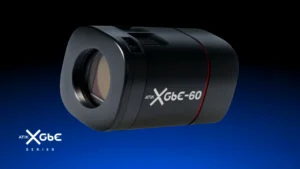
The natural evolution of the Atik Large Format Series is represented today by the XGbE Series. Designed for advanced research, space domain awareness, and complex multi-camera installations, the XGbE Series bridges the legacy of large-format CCD imaging with the high-speed performance of network-addressable CMOS technology
While the Large Format Series was built on the legendary status of Kodak CCDs, the XGbE Series utilizes next-generation Sony sensors that offer native 16-bit digitization, exceptionally low dark current, and ultra-high-speed SFP+ Ethernet connectivity.
Frequently asked questions (FAQ)
Are the Large Format Series cameras compatible with Windows 10 and 11?
Yes. the cameras in the Large Format Series are fully supported by our current Universal Core Software installer for Windows. They also integrate seamlessly with modern third-party applications via our robust ASCOM drivers, ensuring they remain productive tools in any modern observatory.
How do I maintain the dry environment in the sensor chamber?
Maintenance depends on your specific model:
- Atik 383L+, 4000, and 11000: These models utilize high-performance desiccant tablets to prevent condensation. If you notice frosting, tablets can be replaced or recharged by heating them in an oven at 200ºC for two hours.
- Atik 16200: This camera features a sealed, argon-purged chamber, which removes the need for user-replaceable desiccant. Warning: Please do not tamper with the purging port screw, as this may compromise the camera’s cooling ability.
I am having trouble connecting my camera after an update. What should I do?
This is typically a driver synchronization issue. To resolve it, locate the ‘Artemis CCD’ folder in your ‘all apps’ list, navigate to ‘Drivers’, and run the ‘OldDrivers’ executable while your camera is plugged in. This reset routine usually restores the connection immediately.
Does Atik still provide repair services for these discontinued models?
Atik Cameras was founded on the principle of delivering tools built to endure, and we aim to assist our community in keeping their equipment operational whenever possible. Please be aware, however, that support and repair services for the Large Format Series are now limited and provided on a case-by-case basis. Feasibility depends on the specific nature of the technical challenge and the availability of legacy components. If you encounter a hardware issue, please contact our Technical Support team to discuss the options available for your unit
Need more information?Contact the technical support
We are here to help you get the best performance from your Atik cameras. If you are experiencing technical challenges with your Large Format Series Camera setup or have specific questions about software compatibility, our specialized support team is ready to provide expert guidance: contact our technical support.

One Comment