 Skip to main content
Sony IMX533 sensor: complete technical guide
Most imaging sensors are rectangles. But the Sony IMX533 is not. Its 1:1 square format – 3008 × 3008 pixels across a 16mm diagonal – reflects where this sensor fits: compact scientific instruments, chemiluminescence detection and gel documentation. Because symmetric field coverage is more important than raw pixel count. At 9.07 megapixels with a 3.76μm pixel pitch and back-illuminated architecture, the IMX533 sensor is not the biggest or the fastest in Sony’s CMOS lineup. It occupies a specific role, and it fills it well.
This guide covers the IMX533’s specifications, performance characteristics, and how Atik’s ChemiMOS 9 camera puts it to work in demanding long-exposure scientific applications.
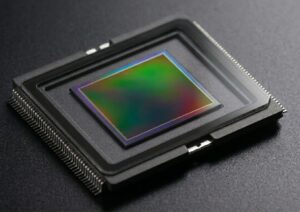
Why the IMX533 is different: Square format and compact size
Every other sensor in Sony’s scientific CMOS lineup uses a rectangular aspect ratio – 3:2 for the IMX571 and IMX455, and similar proportions for others. The Sony IMX533 breaks from that with a true 1:1 square array. For many scientific applications, this isn’t a quirk but a functional advantage.
Symmetric detectors suit symmetric subjects. Circular aperture instruments (microscope objectives, spectroscopic fibres, or integrating spheres) produce circular illumination patterns that fit naturally within a square sensor without the dead corners that a rectangular array would leave unused.
The compact IMX533 sensor size – a 16mm diagonal – also has practical consequences. Smaller sensors require smaller, less expensive optics. For OEM integration into instruments with space constraints, this matters considerably.
Sensor architecture
Resolution and format
| Parameter | Value |
| Effective pixels | 3011 × 3011 (9.07 MP) |
| Total pixels | 3015 × 3080 (9.29 MP) |
| Active imaging area | 11.31mm × 11.31mm |
| Sensor diagonal | 15.968mm (Type 1) |
| Pixel size | 3.76μm × 3.76μm |
| Aspect ratio | 1:1 (square) |
Readout and interface
- Maximum frame rate: 26.9 fps at full resolution (14-bit mode)¹
- 63.6 fps at full resolution (12-bit mode)¹
- Supported output depths: 10-bit, 12-bit, 14-bit¹
- Built-in programmable gain amplifier (PGA), up to 36dB¹
- 8-lane SLVS-EC output¹
- Rolling shutter operation
- RGB Bayer color filter array (color variant); no CFA on monochrome variant
- Multi-camera function supporting up to six chip IDs¹
- Gyro data insertion function¹
One specification worth noting upfront: unlike the IMX571 and IMX455, the IMX533 tops out at 14-bit ADC rather than 16-bit. For many scientific applications this is adequate, but workflows requiring the full 65,536 discrete levels of native 16-bit output should factor this into sensor selection.
Performance
Quantum efficiency: Comparable to larger sensors in the family
Despite its compact format, the IMX533 achieves peak QE above 80% in the green channel – consistent with the back-illuminated architecture it shares with the IMX571 and IMX455.² BSI design relocates the metal wiring layers behind the photodiode, eliminating the obstruction that reduces light collection in front-illuminated sensors. Across the 400–700nm visible range, this typically yields 20–30% higher QE than equivalent front-illuminated designs.
Red-channel sensitivity extends past 650nm, keeping H-alpha at 656nm within usable range for emission-line work. The IMX533 also carries Sony’s STARVIS designation, indicating sensitivity into the near-infrared – useful for applications involving NIR illumination or biological imaging modalities that use longer wavelengths.¹
Frame rate: The IMX533’s strongest differentiator
At 26.9 fps in 14-bit mode and 63.6 fps in 12-bit mode, the IMX533 is substantially faster than either the IMX571 (6.84 fps) or the IMX455 (3.97 fps) at comparable bit depth.¹ Windowed readout modes push this further — sub-frame regions reach into the hundreds of fps. This speed advantage is a direct function of the smaller pixel count: fewer pixels to read out means faster frame delivery at the same interface bandwidth.
For applications that need both sensitivity and speed (live focusing, real-time quality monitoring, fluorescence kinetics, or fast photometric time series) the IMX533 offers a useful combination that larger sensors in the same pixel architecture cannot match.
Full-well capacity and dynamic range
Standard readout provides approximately 51,000 electrons of full-well capacity per pixel. Some implementations push this above 73,000 electrons in extended full-well mode. For a sensor often used in high-dynamic-range applications like gel imaging (where bands span several orders of magnitude in intensity) this capacity is meaningful.
The 14-bit ADC ceiling means dynamic range is expressed across 16,384 levels. In many practical applications, 14-bit is sufficient – shot noise and other noise sources typically limit useful dynamic range well below the theoretical ADC ceiling.
Dark current and noise floor
Read noise reaches as low as 1.0–1.2 e- in high gain mode, putting the IMX533 in the same class as the larger sensors in Sony’s BSI lineup. At these noise levels, the sensor is genuinely photon-noise limited for most imaging conditions — meaning the limiting factor in image quality is the statistical variation in incoming photons, not the sensor’s electronics.
Dark current drops to approximately ~0.0005 e-/pixel/second at -20ºC. At that rate, a one-hour exposure accumulates around 18 thermal electrons per pixel: manageable with dark subtraction, and well below the shot noise contribution of most scientific targets. This level of thermal stability enables the multi-hour integrations that long-stare scientific applications require.
Atik ChemiMOS 9: Scientific CMOS camera implementation
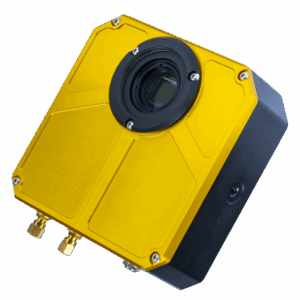
The ChemiMOS 9 is Atik’s IMX533-based camera, designed from the ground up for long-exposure scientific integration. The design priority is stability under extended operation: zero amp glow, precise temperature control, and calibration behavior that remains consistent over time without requiring frequent recapture of reference frames.
Thermal management
The ChemiMOS 9 uses thermoelectric cooling: optimizing for long exposures and avoiding extreme temperatures simplifies integration into instruments where thermal management of the surrounding system is also a consideration.
A key feature is the absence of amp glow, the faint infrared emission from sensor circuitry that appears in the corners of uncalibrated long exposures. Amp glow requires either dark frame subtraction or careful pipeline design to remove; its absence in the ChemiMOS 9 simplifies calibration workflows and reduces the need for matched dark libraries.
Calibration stability: No downtime for recalibration
One design goal that differentiates the ChemiMOS 9 from general-purpose cameras is calibration persistence. Sensor characteristics are stable enough over time that dark frames and calibration data do not require recapture as the sensor ages. This is very relevant for instruments running unattended or for laboratory workflows where recalibration interrupts experimental continuity.
Atik C9: OEM-focused variant
Alongside the ChemiMOS 9, Atik offers the C9 — an OEM-configured variant of the same IMX533 platform designed for integration into larger instruments without a fixed mount. Where the ChemiMOS 9 is configured for standalone use with defined connectivity and a standard housing, the C9 provides the same sensor and readout electronics in a form factor suited to custom mechanical integration. Both variants use the industrial-grade ‘K’ grade IMX533 sensor, which carries Sony’s guarantee for continuous-use applications.
The ChemiMOS 9 is Atik’s IMX533-based scientific camera, designed for long-exposure imaging in life science and industrial applications. The C9 OEM variant is available for instrument integration.
View the ChemiMOS 9 | Download the datasheet | Contact Atik
Application areas
Life sciences: Chemiluminescence, western blotting, and gel documentation
The IMX533’s combination of low read noise, square format, and active cooling targets a cluster of biological imaging modalities where signal levels are low, subjects are often circular or symmetric, and integration times can run to minutes. Chemiluminescence detection, used in western blot analysis, reporter gene assays, and bioluminescence imaging, produces faint, spatially distributed signals that benefit from low noise floors and extended integration. The square sensor format aligns naturally with typical gel and blot geometries.
For gel documentation, the absence of amp glow removes a calibration artifact that is particularly problematic in long-exposure imaging of faint bands. The fixed cooling setpoint ensures dark current behavior is predictable across imaging sessions, supporting quantitative analysis where intensity values are compared between experiments.
OEM scientific instruments
Compact footprint, high sensitivity, and low-noise characteristics make the IMX533 a practical choice for integration into scientific instruments with spatial constraints. The C9 variant exists specifically for these use cases, providing the sensor and electronics without a fixed mechanical form factor.
IMX533 vs related Sony sensors
| Specification | IMX533 | IMX571 | IMX455 | IMX174 |
| Resolution | 9.07 MP | 26.11 MP | 61.17 MP | 2.3 MP |
| Effective pixels | 3011 × 3011 | 6252 × 4176 | 9576 × 6388 | 1920 × 1200 |
| Pixel size | 3.76 μm | 3.76 μm | 3.76 μm | 5.86 μm |
| Sensor format | 1″ square | APS-C | Full frame | 1/1.2″ |
| Diagonal | 16 mm | 28.3 mm | 43.3 mm | 15.9 mm |
| Aspect ratio | 1:1 | 3:2 | 3:2 | 16:10 |
| Max frame rate (full res) | 63.6 fps (12-bit) | 6.84 fps (16-bit) | 3.97 fps (16-bit) | 164 fps |
| Max ADC bit depth | 14-bit | 16-bit | 16-bit | 12-bit |
| Key advantage | Speed, compact format, square aspect | Balanced resolution and sensitivity | Maximum field coverage | Exceptional frame rate |
Within the 3.76μm pixel family, the IMX533 sits between the IMX174 and the IMX571 in terms of format size, but occupies a different position: it’s the only square-format sensor of the three, and the only one that combines relatively high frame rates with scientific-grade noise performance and back-side illumination architecture. The IMX571 and IMX455 offer native 16-bit output and larger fields; the IMX174 is faster still but with a smaller pixel and no BSI design. For applications where the 1:1 format is a fit and the 14-bit output is sufficient, the IMX533 has no direct equivalent in Sony’s lineup.
Implementing the Sony IMX533
Square format optics — The 1:1 sensor aspect ratio means image circle coverage requirements differ from rectangular sensors. A lens or objective that covers a 16mm diameter circle covers the IMX533 fully; for rectangular sensors of similar diagonal, more of the image circle area is used. In practice, optics specified for the “1-inch format” cover this sensor adequately, but this should be confirmed when switching from sensors with different aspect ratios.
Frame rate vs. bit depth trade-off — Full-resolution 14-bit output runs at 26.9 fps; dropping to 12-bit pushes this to 63.6 fps. For applications where frame rate matters, the 12-bit mode is a practical operating point. The 2-bit reduction is rarely the limiting factor in image quality at these speeds.
Multi-camera synchronization — The built-in multi-camera function, supporting up to six chip IDs on a shared interface, enables synchronized multi-sensor setups without external triggering hardware. This is relevant for stereo imaging, multi-angle inspection, or split-spectrum systems where several cameras need to capture simultaneously.
Thermal integration for OEM use — The ChemiMOS 9’s cooling simplifies integration into instruments where the surrounding system also generates heat. Rather than chasing a delta below ambient, the camera holds a fixed temperature, making dark current behavior predictable across variable environmental conditions.
Frequently asked questions
What is the IMX533 sensor size and pixel size? The IMX533 sensor size is 1-inch format with a 15.968mm diagonal and an 11.31mm × 11.31mm active imaging area. The IMX533 pixel size is 3.76μm × 3.76μm, shared with the IMX571 and IMX455. The key distinction from those sensors is the 1:1 square aspect ratio – 3011 × 3011 effective pixels rather than a rectangular array.¹
Does the Sony IMX533 support 16-bit output? No. Maximum ADC output is 14-bit, providing 16,384 discrete levels. This is the main specification difference from the IMX571 and IMX455, which offer native 16-bit output. For most scientific and imaging applications, 14-bit is sufficient; for workflows that specifically require 16-bit data, those sensors are the better choice.
What is the IMX533’s read noise? In high gain mode, read noise reaches as low as 1.0–1.2 e-, placing it in the same range as the larger sensors in Sony’s BSI CMOS lineup. This noise floor is low enough that most imaging scenarios are photon-noise limited rather than electronics-limited.
How does the IMX533 compare to the IMX571? Both use the same 3.76μm back-side illumination pixel architecture, so per-pixel sensitivity and noise performance are closely matched. The IMX533 is faster (up to 63.6 fps vs. 6.84 fps), smaller (16mm vs. 28.3mm diagonal), and square-format. If frame rate and compact format are priorities, the IMX533 is the better fit. If field coverage, resolution, or native 16-bit output matter more, the IMX571 or IMX455 are the appropriate choices.
What Atik cameras use the IMX533? Atik offers two IMX533-based products: the ChemiMOS 9, a cooled scientific camera optimized for long-exposure life science and industrial applications, and the C9, an OEM-configured variant designed for integration into custom instruments without a fixed housing.
Conclusion
Square format, compact size, and higher frame rates define where the IMX533 fits. Sharing the 3.76μm BSI pixel architecture of Sony’s larger scientific sensors, it delivers comparable per-pixel sensitivity and noise performance, but in a form factor and at speeds those sensors cannot match. The 14-bit ADC ceiling and smaller field are real trade-offs, but for the applications this sensor targets, they rarely govern the outcome.
Atik’s ChemiMOS 9 takes that sensor and builds a long-exposure scientific camera around it: fixed-setpoint cooling, zero amp glow, stable calibration behavior, and an OEM-ready variant for instrument integration. For life science imaging and chemiluminescence detectionapplications where the square format is a fit, it represents a well-considered implementation of a sensor that occupies a genuinely distinct position in Sony’s CMOS lineup.
Explore the Atik ChemiMOS 9
The ChemiMOS 9 is available as a standalone scientific camera and as the C9 OEM variant for instrument integration. Full specifications and ordering information are on the product page. For application support or OEM enquiries, the Atik Cameras team is always available to assist.
View the ChemiMOS 9 product page | Download the datasheet | Contact Atik
Sources
